Description
Incorporate this resource as daily preparation for technique class. Intentionally add this pre-class preparation time to increase student awareness, somatic presence, and total-body integration. Use to build greater body-mind connectivity, concentration and attention to the inner landscape of the body instrument. Create high expectations from your dancers and performers. Let this instrument offer dancers a way to fully integrate themselves before technique class. Allow approximately, 5-8 minutes.
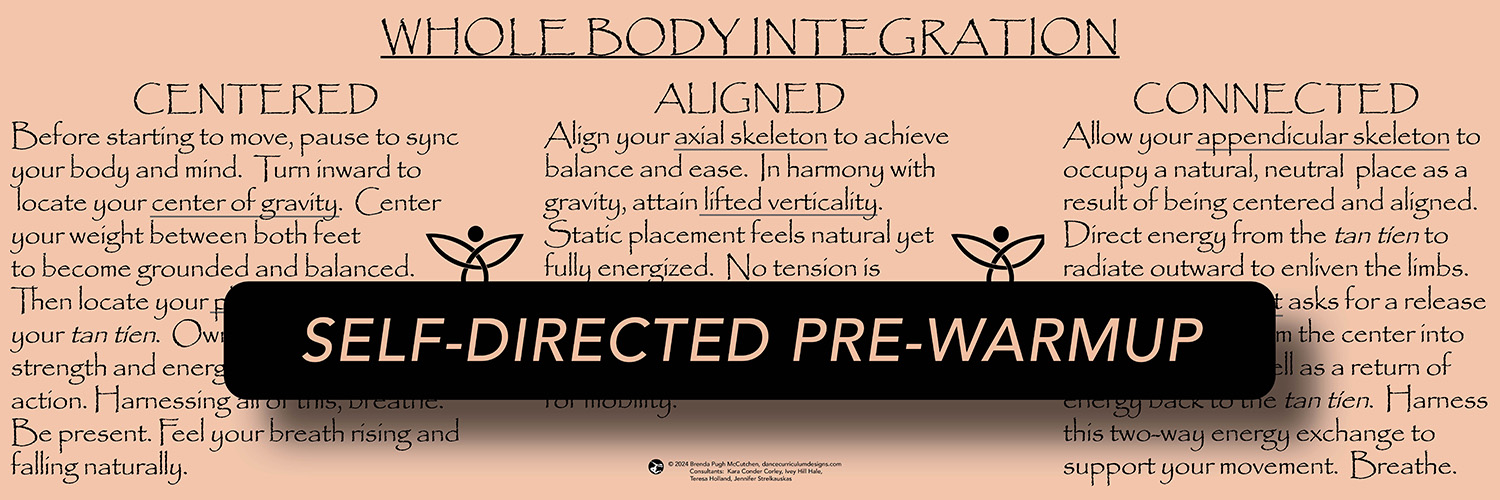
Placed near or about-the-dance-studio-mirror, this long somatic chart invites individuals to shift from the outside world into their inner world to prepare themselves to dance. Choose the best place in your studio for it to be most useful.
Specifications: 7’ long by 2’ tall ( 84” x 24)
Suited to many settings for body work and dance for young adults and adults.
Target populations: Private dance studios; high school dance, ballet studios, classical dance conservatories, dance companies, gifted dance in MS and HS, college and university technique classes, serious dancers and performers.
Body work settings such as workout gyms, YMCAs, Alexander, Feldenkrais, and Body-Mind Centering also find it a useful self-directed resources.
Locating this somatic instrument in your space: Ideally place it just above dance studio mirrors for self-directed pre-class somatic preparation before class’s physical warmup, depending on the height of the mirrors. The poster may be placed anywhere that is conducive to quiet contemplation and concentration to increase inner focus while in use. Placement best near or slightly above eye-level so one’s verticality is maintained without strain to the neck or upper torso.
Suggested Teacher Guidance for Use of this Instrument.
Part 1: Introduce the “Pre-Class Preparation: Whole Body Integration.”
The teacher introduces the pre-class preparation process and explains what is to be expected from it and the approximate time it will take once students learn to self-direct it.
For now, take the time needed to guide its use and state its outcomes relative to developing technique and performance skills.
After introducing, s/he leads each section separately, stopping after each section to explain its process. No need to rush the process. Time spent on such guidance is well-spent to give each student the understanding of how their own somatic awareness enhances their dancing and performing skill as well as tunes them into their own body instrument. Explain how this somatic process ushers them from their outer world into their own aware and responsive body instrument, from speaking to a quiet, calm inner world of receptivity.
Part 2: Sense each class’s readiness to take this work into their own individual practice. Advise them to find their most comfortable spot in the room where they can see the scroll without being distracted by anyone else or anything. It is their safe space to be without interruption.
Over an extended period, dancers will internalize this process and be ready to add more aspects to it to deepen and enrich it.
Part 3: Cool-down. In addition to being a valuable pre-warmup body integration, this instrument is useful as part of the end of class or cool-down process to further integrate the whole body again after a good workout.